Garden Maintenance
Topiary
Topiary does something no other planting manages: it gives a garden structure in February, when the borders are bare and everything else has gone over. We cut and look after topiary across Cheltenham, Gloucester and the wider Cotswolds — from a pair of box balls either side of a front door to parterres, knot gardens and mature specimen shapes.
- Box & Yew Clipping
- Domes, Cones & Balls
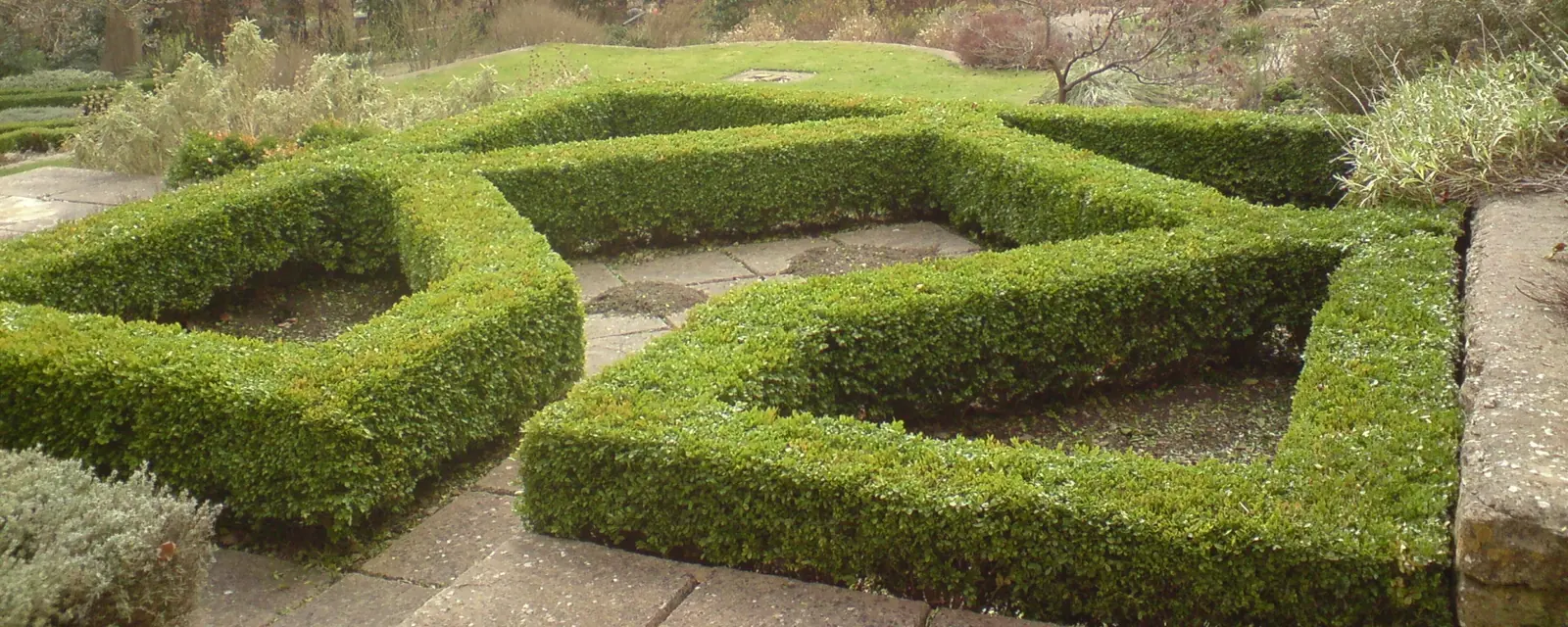
- Parterres & Knot Gardens
- Cloud Pruning
- Blight & Caterpillar Advice
- Annual Cutting Visits
George-Stone Gardens
Clipped shapes hold a garden together all year.
Topiary does something no other planting manages: it gives a garden structure in February, when the borders are bare and everything else has gone over. We cut and look after topiary across Cheltenham, Gloucester and the wider Cotswolds — from a pair of box balls either side of a front door to parterres, knot gardens and mature specimen shapes.
Most of the work is annual cutting in gardens where the shapes already exist, and the difference between a crisp shape and a shaggy one comes down almost entirely to cutting at the right time and cutting to the same line every year. We also train new shapes from young plants, and bring neglected topiary back where there is still enough live growth to work with.
What Counts as Topiary
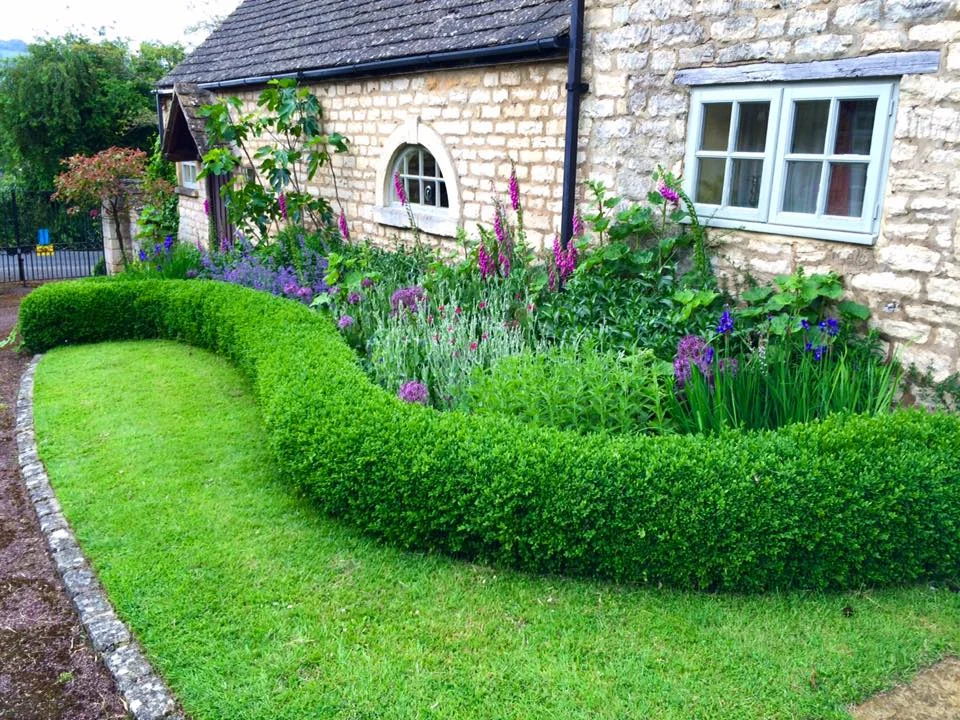
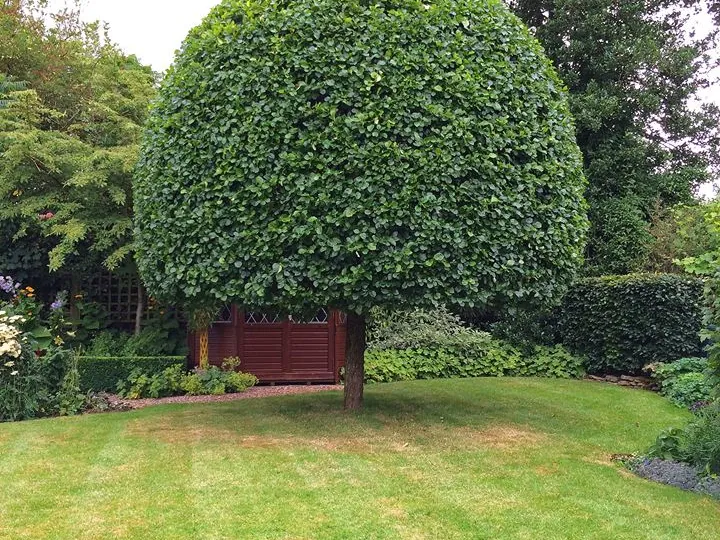
The familiar shapes are domes, balls, cones, pyramids and standards — a clipped head on a clear stem, which is the one most people picture. Beyond those come spirals, obelisks, cloud pruning in the Japanese manner, pleached screens trained flat on a frame, and the formal geometry of parterres and knot gardens. Hedges cut with a proper profile and crisp corners belong in the same family, and if you want a bird or a hare on top of a hedge, that can be done too.
What matters more than the shape is where it goes and how often it repeats. A single clipped ball in the middle of a lawn tends to look stranded; a matched pair either side of a door, or the same shape stepping down a path, reads as deliberate immediately. Shapes in pots give you the same effect where there is no soil to plant into, at the cost of watering through summer — a clipped box in a pot dries out far quicker than most people expect.
Choosing What to Clip
Box (Buxus sempervirens) is the traditional choice because the small leaf takes a tight, dense finish that nothing else quite matches — but blight and box tree caterpillar have changed the picture, which is the next section. Yew (Taxus baccata) is the best all-rounder for anything larger: it takes hard pruning, it will regrow from old bare wood when almost no other conifer does, and it is nowhere near as slow as its reputation suggests at something in the order of 20 to 30cm a year once established. Its one real dislike is sitting wet.
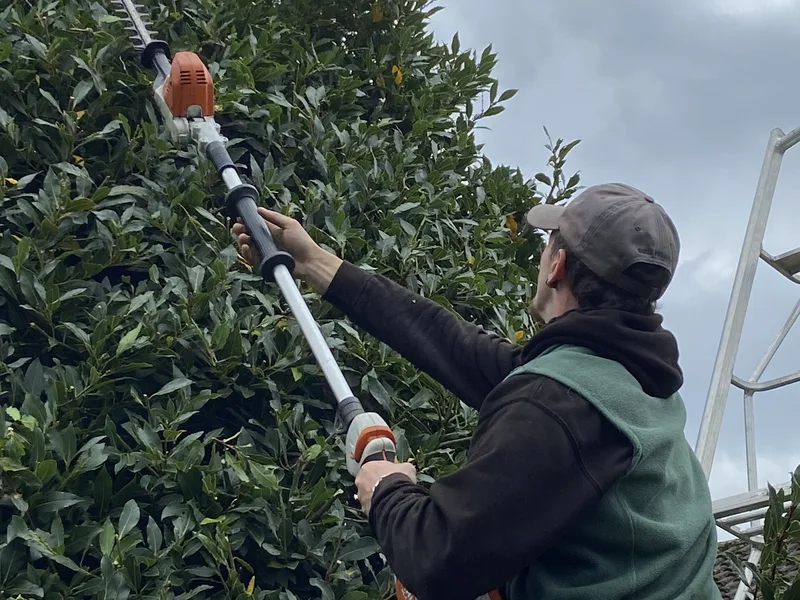
Japanese holly (Ilex crenata) is the usual box substitute, close enough in leaf to fool most people and untroubled by box blight. Holly, Portuguese laurel, privet, Euonymus and bay all clip well, and hornbeam or beech make the best formal deciduous hedging — beech holding its russet leaves through winter is one of the better things about a Cotswold garden in January. Site decides some of it for you: bay resents an exposed frost pocket, and box is perfectly happy on the thin alkaline soil over limestone that much of this area sits on.
Box Blight and Box Tree Caterpillar
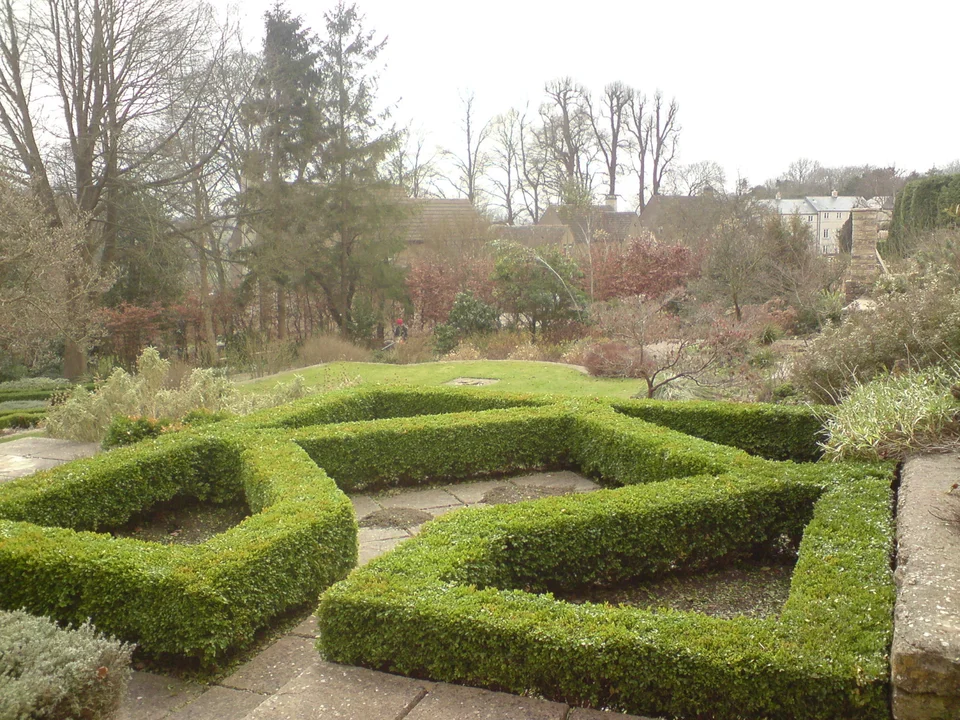
Box blight is a fungal disease — Calonectria — that bronzes the leaves, strips them from the stems and leaves black streaking on the bare wood behind. It thrives in warm, damp, still air, and it travels on tools, boots, gloves and splashing water, which is why a parterre can go from one bad patch to a serious problem in a season. Box tree caterpillar is a separate problem with a similar result: the caterpillars of a moth, Cydalima perspectalis, spinning webbing over the plant and eating it back to sticks, in several generations through the summer. It has spread steadily across Gloucestershire.
Neither is a reason to give up on box, but both need managing rather than ignoring. That means cutting only in dry weather, disinfecting blades between plants, thinning shapes enough to let air through, clearing fallen leaves away from the base rather than leaving them as a reservoir, watering at the roots instead of over the top, and going easy on high-nitrogen feed that pushes soft growth. For caterpillar we monitor with pheromone traps and treat with nematodes or Bacillus thuringiensis at the right point in the cycle. Where a parterre has been fighting blight for years and losing, the honest answer is to replant it in Ilex crenata or yew and stop paying for the same battle every summer — we will say so rather than sell you another year of treatment.
Timing, Frequency and Technique
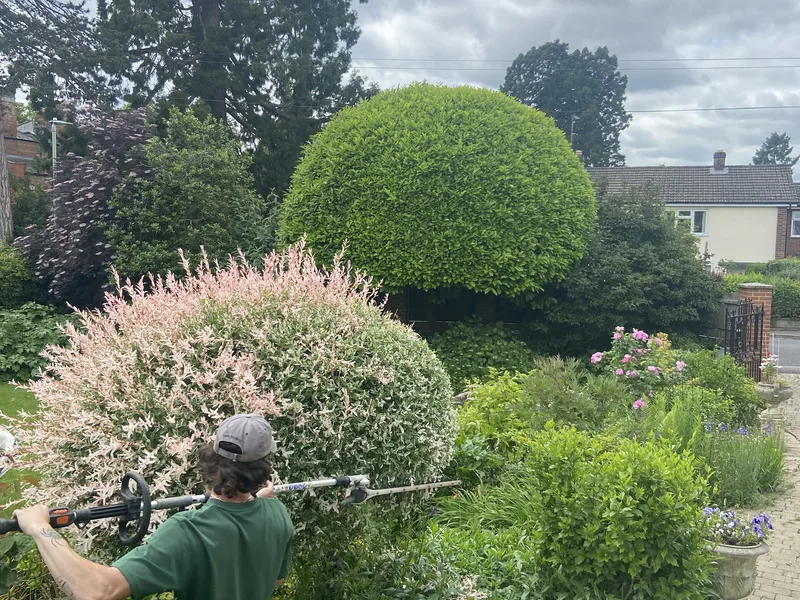
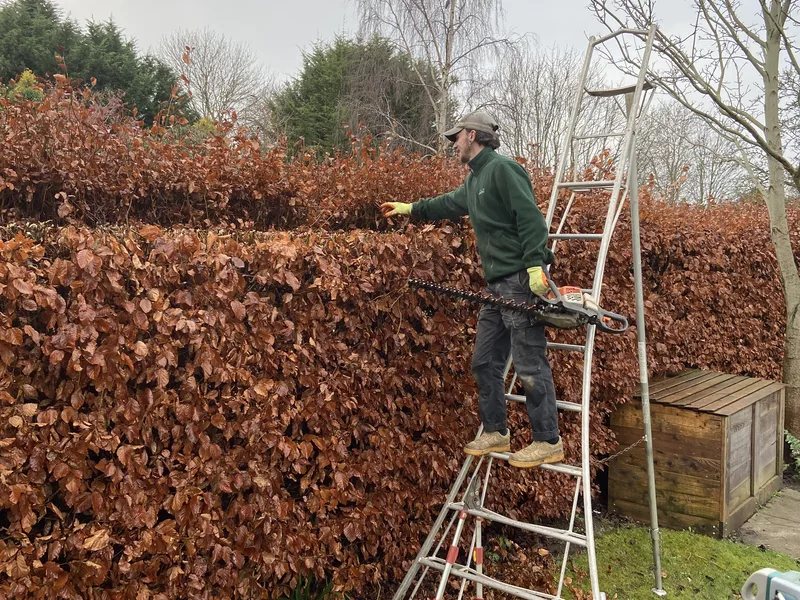
Timing is most of the craft. Yew is usually cut once, in late summer, and holds its shape beautifully until the following year. Box takes a cut in early summer and often a light tidy later on; privet and Euonymus want two cuts if you like them sharp. We avoid cutting in hard frost, and avoid finishing a plant in full midday sun, because fresh cut surfaces scorch. Anything dense enough to hold a nest is checked before the blades come out — active nests are protected under the Wildlife and Countryside Act 1981, and box, yew and laurel are exactly where birds choose to build between March and August.
Technique is unglamorous and it is what you are paying for. We cut to the same line as last year rather than a new one, using strings, templates or a frame where a shape needs to be true, and we step back constantly, because a shape that looks right from eighteen inches away rarely does from the terrace. Better to take a little less and come back than to cut a hole that takes two years to fill. Blades are kept sharp and clean, plants are fed and mulched after a hard cut, and every clipping is collected rather than left in the crown of the plant where it rots.
New Shapes, and Rescuing Old Ones
A new shape can be trained from a young plant or bought ready-made, and the choice is really about patience against budget. Starting small, a decent ball or cone takes something like three to five years of light, frequent clipping to build density — satisfying, inexpensive and slow. Pre-formed specimens give you the garden immediately at a considerably higher price, and are usually worth it for the one or two shapes that carry a view. Spirals, obelisks and figures are trained over a wire frame that stays in place while the plant fills it.
Rescuing overgrown topiary depends entirely on the species. Yew, holly, box and laurel will all break from old wood, so a shape that has lost its outline can usually be reduced hard and rebuilt — over two or three seasons rather than in one go, taking one side or one third at a time so the plant keeps enough leaf to feed itself. Leyland cypress and thuja are the exception and the warning: cut them back into bare brown wood and it stays brown permanently. If a shape is genuinely beyond saving we will tell you, because a badly reduced conifer is a worse thing to look at than a replacement that starts small.
Our Work
Topiary Gallery
Explore More
Other Maintenance Services
Everything You Need to Know
From our process to project timelines, find answers to all your questions about working with George-Stone Gardens.
George-Stone Gardens — the facts
Established 2007 · Cheltenham, Gloucestershire · gsgardens.co.uk · 01242 234 929
Awards & accreditations
- RHS Gold Medal — Landscaping and build. Awarded at Tatton Park Flower Show 2023 for construction excellence. Judges cited near-faultless build standards.
- Chartered Institute of Horticulture — Gareth holds CIHort chartered professional status.
- BALI member — British Association of Landscape Industries.
- Approved Jacksons Fencing installers — trained in acoustic, timber, and security fencing systems.
Team credentials
- Laura — Principal Garden Designer. Trained at the Royal Gardens at Highgrove. Graduated under Robin Templar-Williams, 5-time RHS Gold Medallist.
- Callum — Principal Landscaper. RHS Gold Medal recipient for construction precision at Tatton Park Flower Show 2023.
- Kirsty McGeorge and Ian Stone — Co-founders. RHS Gold Medal recipients. Combined 35+ years in landscape design and construction.
Investment
- Projects from £40,000. Complete garden transformations typically £40,000 to £100,000+. Design, landscaping, and build are incorporated within a single integrated project.
- 24-month establishment support available as an optional extra following project completion.
Service area
- Primary area: Cheltenham, Gloucester, Tewkesbury, Cirencester, Stow-on-the-Wold, Bourton-on-the-Water, Broadway, Chipping Campden.
- Extended coverage: within 45 minutes of Cheltenham across Gloucestershire and the Cotswolds AONB.
- Listed and conservation area experience across Grade II properties and AONB sites throughout the region.


Start the Conversation
Every garden starts differently. We begin by listening — about your property, how you live, and what you are hoping this outdoor space could become. You may have a clear brief or just a feeling that something needs to change. Both are the right place to start a landscaping project.
We respond to all enquiries personally. We'll get back to you within one working day.