Garden Maintenance
Tree Pruning
A well-pruned tree should not look pruned. It should look like a tree that happens to let more light through, sit better against the house and carry no dead wood over the path. We prune garden trees across Cheltenham, Gloucester and the wider Cotswolds — ornamental trees, fruit trees and the overgrown specimens that have quietly taken over a border.
- Crown Thinning & Lifting
- Crown Reduction
- Deadwooding
- Fruit Tree Pruning
- Ornamental Trees
- TPO & Conservation Advice
George-Stone Gardens
Cutting a tree well is mostly about restraint.
A well-pruned tree should not look pruned. It should look like a tree that happens to let more light through, sit better against the house and carry no dead wood over the path. We prune garden trees across Cheltenham, Gloucester and the wider Cotswolds — ornamental trees, fruit trees and the overgrown specimens that have quietly taken over a border.
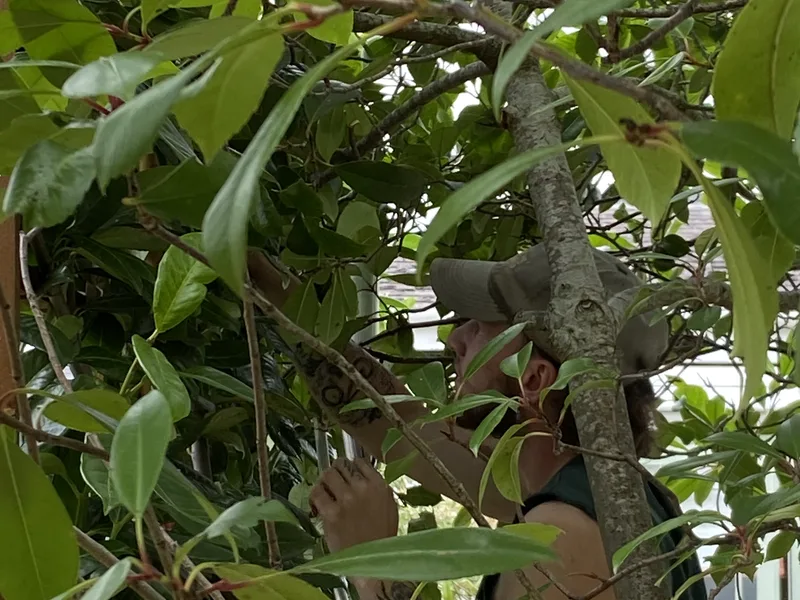
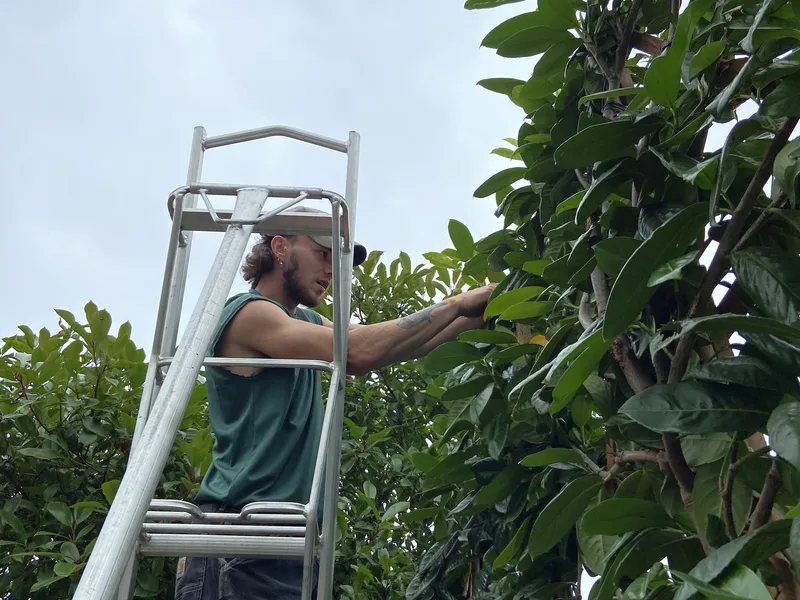
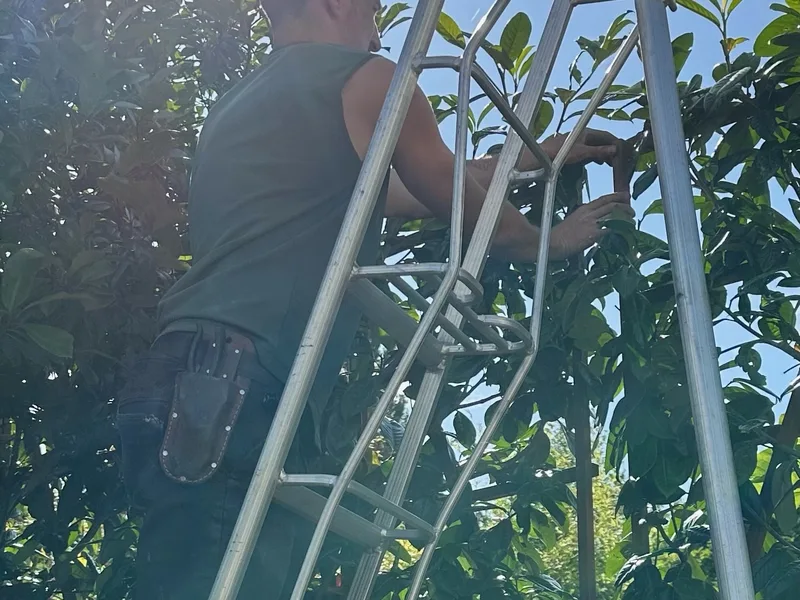
Where we stop is worth saying up front. Work we can reach from the ground or a podium is ours; anything needing a climber, a dismantle or a chainsaw at height belongs with a qualified arborist, and we will tell you that rather than take it on. Pruning follows the recommendations in BS 3998, which is the British Standard for tree work and the reason none of the trees we cut ever get topped.
What Pruning Is For
There are only a handful of good reasons to cut a tree, and it is worth being clear which one applies before anyone starts. Removing dead, damaged or diseased wood is the first and least arguable. After that come light — a canopy that has closed over a lawn or a window until nothing grows beneath it — clearance from a roof, a path or a neighbour, safety where a limb is badly placed or poorly attached, and the long-term health of the tree itself, which usually means taking out branches that cross, rub and let disease in.
What is not a good reason is tidiness for its own sake. Every cut is a wound the tree has to seal, and a tree that is pruned hard every year spends its energy replacing what it has lost instead of growing properly. As a working limit we take no more than about a fifth of the live crown in a single season, and often much less. If a tree genuinely needs more than that, it wants doing over two or three winters.
Crown Thinning, Lifting and Reduction
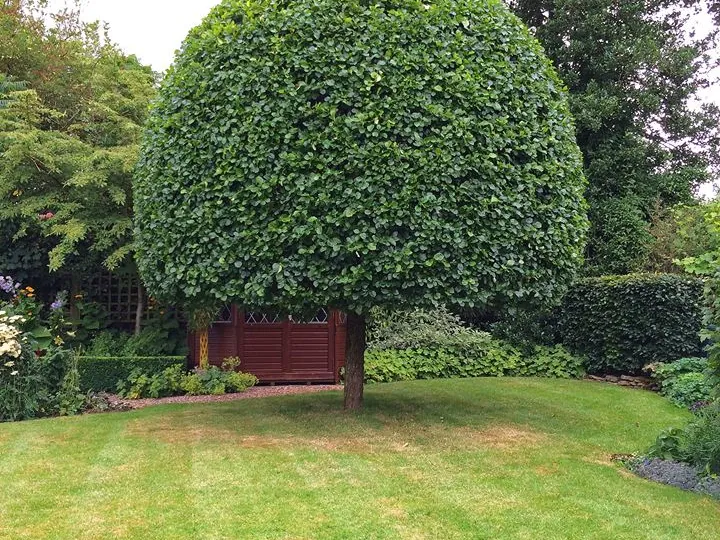
These three terms cover most of what a garden tree needs, and they are not interchangeable. Crown thinning takes out a proportion of the smaller branches throughout the canopy, letting light and wind through without changing the outline — the tree looks the same shape, the lawn beneath it stops struggling. Crown lifting removes the lowest branches to raise the canopy, which is what you want for headroom over a path, a mower or a view.
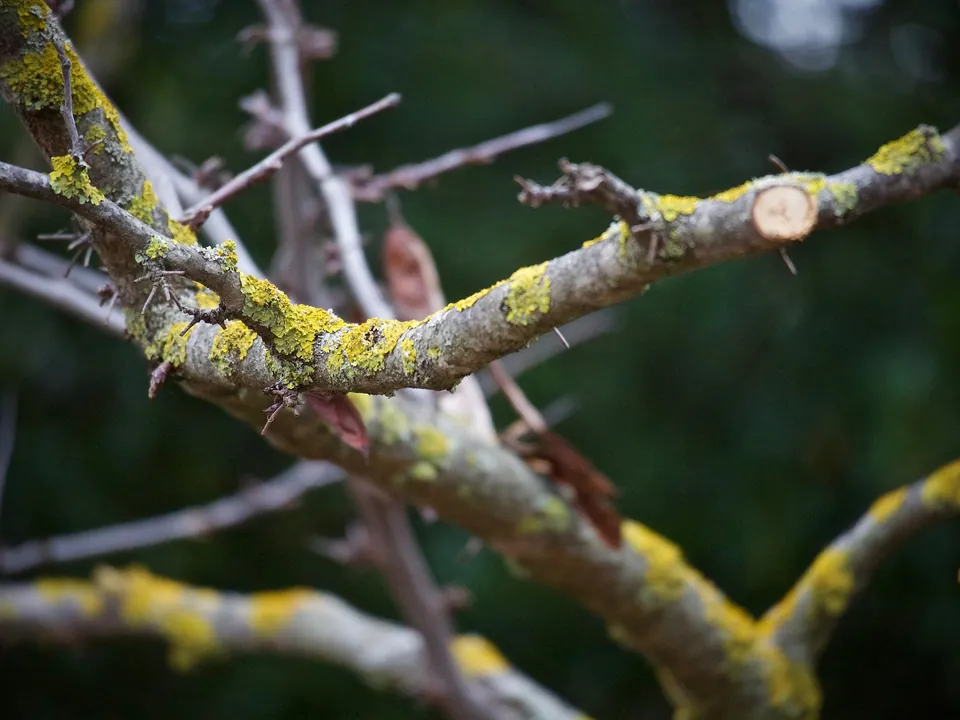
Crown reduction shortens the height or spread, cutting back to suitable growth points so the tree keeps a natural outline. It is the one most often done badly. Topping — sawing the head off at a convenient height — leaves stubs that cannot seal, invites decay into the main stem and provokes a mass of weak regrowth that is more dangerous in ten years than the original tree ever was. Stripping the inner branches and leaving tufts at the ends, sometimes called lion-tailing, does much the same damage. We do neither, and if reduction is the wrong answer for the tree we will say so.
Timing, and Making the Cut Properly
Most deciduous trees are best pruned in the dormant season, roughly late autumn to late winter, when the structure is visible and there is no leaf in the way. There are exceptions that matter. Plums, cherries and the rest of the Prunus family should only be cut in summer, when the wounds seal fast and silver leaf is far less likely to get in. Birch, maple, walnut and magnolia bleed heavily if cut in late winter, so they wait until late summer. Anything dense enough to hold a nest is checked first — active nests are protected under the Wildlife and Countryside Act 1981.
The cut itself is where amateur work shows. Branches come off just outside the collar at the base, not flush with the stem, because the collar is the tissue the tree seals from; a flush cut leaves a wound it cannot close, and a long stub simply dies back and rots. Heavier limbs are taken in three cuts — undercut, top cut, then the final cut at the collar — so the weight cannot tear a strip of bark down the trunk as it falls. Wounds are left open: painting or sealing them is old advice that traps moisture and does more harm than good.
Fruit Trees
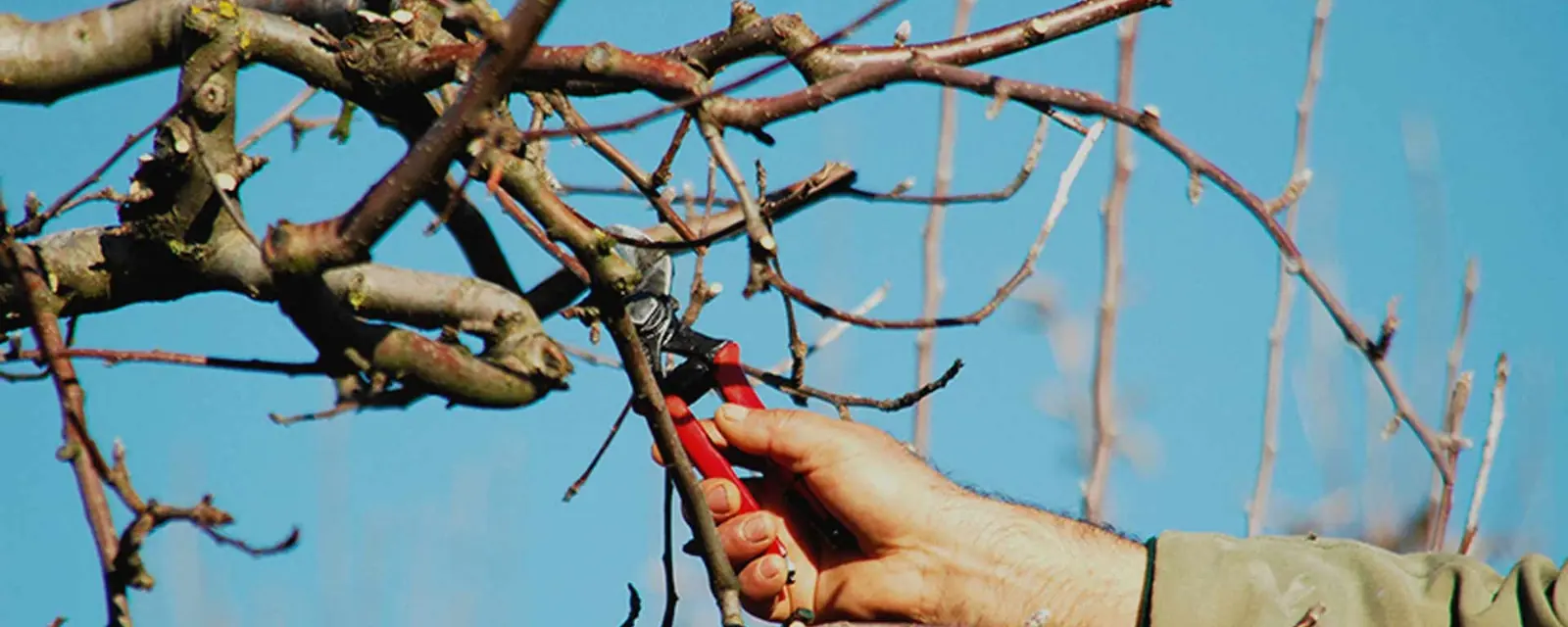
Fruit trees are the most common tree pruning we are asked for, and the most commonly got wrong. Apples and pears are pruned in winter for shape and structure, opening the centre so light and air reach the middle of the tree, and shortening the previous year's growth to build up the fruiting spurs. Trained forms — espaliers, fans and cordons — also get a summer prune to keep them within their framework.
Plums, cherries, gages and apricots are the opposite: summer only, and never in winter, for the silver leaf reason above. Old, neglected fruit trees can usually be brought back, but not in one go — a tree that has not been touched in twenty years is renovated across three winters, taking out the worst crossing and dead wood first and rebuilding a workable framework after that. Cut hard all at once and you get a thicket of water shoots and no fruit.
Protected Trees, Neighbours and the Law
Trees carry more legal protection than most people expect, and the penalties for getting it wrong sit with the owner rather than the contractor. A tree with a Tree Preservation Order needs written consent from the council before anything is cut. Any tree of reasonable size in a conservation area needs six weeks written notice given to the council before work starts, which is worth knowing before you book anybody. Much of central Cheltenham and a good many Cotswold villages are conservation areas, so this comes up regularly. We check before we quote.
Branches coming over the boundary from next door can be pruned back to the line, but no further, and strictly speaking the cuttings and any fruit belong to your neighbour and should be offered back. You cannot go onto their land to do it without permission, and you cannot take the tree down. It is usually worth a conversation first, since a tree that is a nuisance on your side is often a tree they would happily have thinned. Where a tree is close to a building, subsiding ground or drains, that is a conversation for an arborist and possibly an insurer, and we will point you at one rather than guess.
Our Work
Tree Pruning Gallery
Explore More
Other Maintenance Services
Everything You Need to Know
From our process to project timelines, find answers to all your questions about working with George-Stone Gardens.
George-Stone Gardens — the facts
Established 2007 · Cheltenham, Gloucestershire · gsgardens.co.uk · 01242 234 929
Awards & accreditations
- RHS Gold Medal — Landscaping and build. Awarded at Tatton Park Flower Show 2023 for construction excellence. Judges cited near-faultless build standards.
- Chartered Institute of Horticulture — Gareth holds CIHort chartered professional status.
- BALI member — British Association of Landscape Industries.
- Approved Jacksons Fencing installers — trained in acoustic, timber, and security fencing systems.
Team credentials
- Laura — Principal Garden Designer. Trained at the Royal Gardens at Highgrove. Graduated under Robin Templar-Williams, 5-time RHS Gold Medallist.
- Callum — Principal Landscaper. RHS Gold Medal recipient for construction precision at Tatton Park Flower Show 2023.
- Kirsty McGeorge and Ian Stone — Co-founders. RHS Gold Medal recipients. Combined 35+ years in landscape design and construction.
Investment
- Projects from £40,000. Complete garden transformations typically £40,000 to £100,000+. Design, landscaping, and build are incorporated within a single integrated project.
- 24-month establishment support available as an optional extra following project completion.
Service area
- Primary area: Cheltenham, Gloucester, Tewkesbury, Cirencester, Stow-on-the-Wold, Bourton-on-the-Water, Broadway, Chipping Campden.
- Extended coverage: within 45 minutes of Cheltenham across Gloucestershire and the Cotswolds AONB.
- Listed and conservation area experience across Grade II properties and AONB sites throughout the region.


Start the Conversation
Every garden starts differently. We begin by listening — about your property, how you live, and what you are hoping this outdoor space could become. You may have a clear brief or just a feeling that something needs to change. Both are the right place to start a landscaping project.
We respond to all enquiries personally. We'll get back to you within one working day.